The recipient of the 2025 Paul R. Jones Outstanding Paper Award of the Division of the History of Chemistry (HIST) of the American Chemical Society is Prof. Dr. Robert B. Heimann. The paper was “The German Polymath Ehrenfried Walther von Tschirnhaus (1651-1708) and His Pursuit of the European Hard-Paste Porcelain Formula,” Bulletin for the History of Chemistry, 2025, 50(2), pp 80-92.
The award is presented to the authors of the best paper published in the Bulletin for the History of Chemistry during the previous three years, 2023, 2024, 2025.
The Paul R. Jones Outstanding Paper Award consists of an engraved plaque and a check for $250 from HIST and a book award from the Synthesis series (https://press.uchicago.edu/ucp/books/series/SYN.html), sponsored by the Science History Institute. Additional information about the award can be found on the HIST website at http://acshist.scs.illinois.edu/awards/paper.php
Paul R. Jones Outstanding Paper Award for 2025
Robert B. Heimann
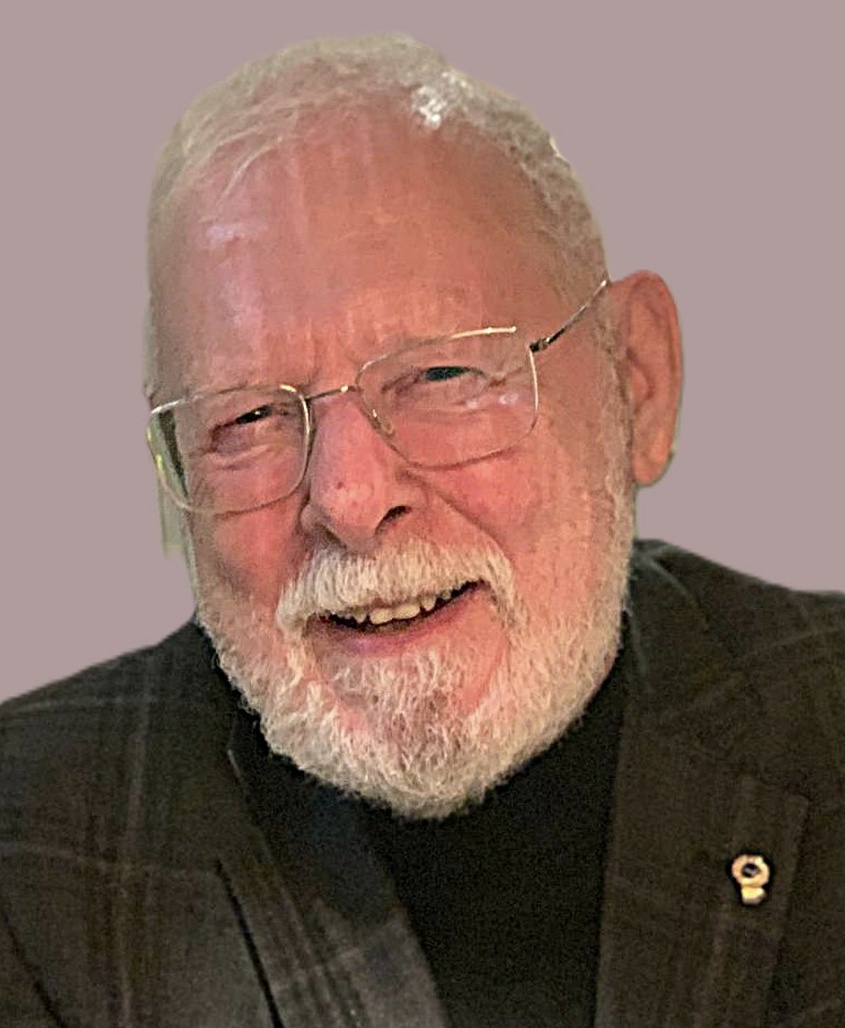
Robert B. Heimann of the Technische Universität Bergakademie Freiberg is the recipient of the 2025 Paul R. Jones Outstanding Paper Award for “The German Polymath Ehrenfried Walther von Tschirnhaus (1651-1708) and His Pursuit of the European Hard-Paste Porcelain Formula,” Vol. 50, No. 2 (2025) 80-92.
Robert Heimann obtained his M.Sc. and Ph.D. degrees in Mineralogy (1) from the Freie Universität Berlin in 1963 and 1966, and his habilitation for mineralogy and crystal chemistry at Fachbereich Chemie of the same university in 1972. He is now professor emeritus of Technical (Applied) Mineralogy at Freiberg, living in Görlitz., Saxony He also spent much of his career in Canada in industry (3M Corp.), Government (Atomic Energy of Canada, Alberta Research Council) and Academia (University of Toronto).
Professor Heimann is well-known for his outstanding published papers. He received the Pergamon Press Prize Award for 1984 for “Structural aspects and conformation of linear carbon polytypes (carbyne).” He received the Georg-Agricola Medal of the German Mineralogical Society for “outstanding lifetime achievements in the field of Applied Mineralogy” in 2001. Also, in 2025, he received the Wiley Top Viewed Article recognition for “Ancient and historical cooking pots and food: an eternal communion,” published in Archaeometry 67(1) (2025) 219-234. He has published more than 300 research articles and authored and co-authored 11 books!
While “priority disputes” often dominate historical papers, Heimann chooses to place the history of hard-paste porcelain in full context. He defends the claim that the work of Ehrenfried Walther von Tschirnhaus is the foundation of the later industry, while acknowledging the administrative role of Johann Friedrich Böttger, Tschirnhaus’s assistant, in the success of “Meissen porcelain”.
Porcelain likely originated in China during the Eastern Han dynasty (25-220 CE). When the first Chinese porcelain masterpieces arrived in Europe in the 14th century, many attempts to reproduce it were made, but only in the early 18th century was true hard-paste porcelain produced in Germany. Tschirnhaus benefitted from his education in Leiden. He conversed with Baruch de Spinoza. He also read the works of Descartes. Among other things, he learned how to cast, grind and polish very large “burning lenses.” He also made his “Grand Tour” (1674-1679) to England, where he possibly visited Isaac Newton, to France, where he consulted with François Villette, and to Italy, where he met Manfredo Settala in Milan. The outcome of this extensive research was the construction of powerful solar furnaces.
Tschirnhaus also corresponded with Leibniz. In 1694, he was already modifying minerals to create “glassy” solids. The final secret was to find and use the right clay. Rather than working in secret, he visited many fabrication sites of refractories including John Dwight’s Fulham stoneware kilns in 1675, and the faience and frit porcelain factories in Delft and Saint-Cloud in 1701. The key published evidence of the progress made by Tschirnhaus occurred in 1697. The keys were: highly refined clay, sintering with the right flux, and taking advantage of eutectic mixtures. What he found was that porcelain was primarily polycrystalline, not amorphous.
Böttger was primarily an alchemist, employed by the Saxon elector to make “chymical” gold. In 1706, Tschirnhaus convinced the Saxon viceregent Prince of Fürstenberg to put him to better use in constructing truly high temperature furnaces on Tschirnhaus’s advice. These were used to create high temperature crucibles and later, red stoneware called jasper porcelain. When Tschirnhaus finally obtained his “white earth clay” i.e. kaolin in the summer of 1708, he mixed it with alabaster as a flux and fired it to produce a type of true white porcelain. Unfortunately, Tschirnhaus died a few months later.
Heimann then documents the nefarious behavior by Böttger involving theft and misrepresentation. He also notes that in1962, a laboratory protocol, dated 1708, was found and that it contained the secret of hard-paste porcelain. It was the Tschirnhaus recipe, written by a Dr. Bartholomäi. This fact was already celebrated in Tschirnhaus’s obituary in the Acta Eruditorum of 1709. Nevertheless, Böttger brought the commercial product to market at the Royal Porcelain Manufactory at Meissen from 1710 onward. Alas, times are tough for this famous firm in 2025!
1) Dr. Heimann’s Ph.D. advisor was Prof. Dr. Karl Richard Mehnert (1913-1996), director of the Institute of Mineralogy, Freie Universität Berlin. Mehnert was a petrologist, but the topic of Heimann’s dissertation was much more of a chemical-technical nature (“Dissolution of quartz in glass-forming melts,” transl.) This was the outcome of the rules and regulations of German universities at this time. The “chief” of an institute was more or less automatically the nominal advisor/supervisor of all Ph.D. dissertations, regardless of their topics. In his case, Mehnert delegated the task to the assistant professor, Dr. Alexander Willgallis (1927-2017). Subsequently, Heimann published with him a paper related to his dissertation (“Zerbrechung von Quarz in Schmelzen und Gläsern” [“Cracking of quartz in melts and glasses”], Glastechn. Ber. 1969, 43(1), 12-15).